BTSF in chronological order (most recent articles appear first):

Monday, April 28, 2014

Living Liberation in Combating Racism

The following is BTSF's contribution to the MennoNerds blog tour surrounding the this year's Wild Goose Festival theme 'Living Liberation.'

In a culture rife with systemic injustice, what does racial liberation look like for our society? 

When it comes to race, we are truly in need of liberation. Racism binds our communities. It confines the futures of our children. It shackles our capacity to live into God's will. What would it mean for us to become liberated from racism?

You cannot be an oppressor and a liberator. The oppressor cannot begin to understand what must take place to undo the damage that has been caused. Those that created and benefit from injustice do indeed have a responsibility to right the wrongs--but not as saviors. As servants. These servants must defer to those already fashioning solutions to their own oppression. By listening and submitting, we take the first steps to uprooting the embedded structures of injustice. 

Living liberation means breaking down the walls of oppression that bar access to board rooms and legislatures. It means matching our words of unity with our dollars and our feet. It means fully affirming our cultural differences, while not allowing those differences to sow seeds of disparity.  

God calls us "to loose the bonds of injustice, to undo the thongs of the yoke, to let the oppressed go free, and to break every yoke...to share your bread with the hungry, and bring the homeless poor into your house; when you see the naked, to cover them, and not to hide yourself from your own kin." (Isaiah 58)

We can proclaim our liberation from unjust systems of power, from wage disparity, from  narrow beauty standards, and skewed media representation. We can emancipate ourselves from the prison-industrial complex, the school to prison pipeline, and disparately-funded education systems. We can declare freedom from voter suppression, biased self-defense laws, and broken immigration policies.

So who are the liberators? Is the Church? Is it you? Or do you remain complicit in the oppression of God people? Will you stand by and "serve your own interest on your fast day, and oppress all your workers?" (Isaiah 58)

Ultimately, there is one Liberator. We know that "if the Son makes you free, you will be free indeed." (John 8:36). Christ joined ranks with the oppressed of the world that we might be liberated. How might we follow in his example as His hands and feet on earth?


The Wild Goose Festival is a gathering at the intersection of justice, spirituality, music and the arts, happening June 26-29 outside of Asheville in Hot Springs, NC. You can get more information and tickets at: www.wildgoosefestival.org.

The theme this year is 'Living Liberation and declaring that “we want to live in a world that is set free from the bonds that have been placed on us and the bonds we place on others. We want to be free from the barriers of discrimination that keep us from living as one body.”

Thursday, April 24, 2014

Friday Fruit (04/25/14)

Photo: Colorlines/Mark Wilson/Getty Images
On Fridays, BTSF offers links to other discussions about race & Christianity. It's an opportunity for you to read other perspectives, and for me to give props to the shoulders on which I stand...


Weekly Round Up:

    These are some of BTSF's links of interest this week. What are yours?

    Feel free to contribute your own links in the comments section, or submit items you feel should be included during the week. Self-promotion is encouraged.

    Sunday, April 20, 2014

    Beyond Justice

    This is the final post in our series about going 'beyond' when it comes to race and racism. 

    Justice is important. Justice restores what has been broken. It rights the wrongs. It returns things to how they should be. We see throughout scripture that justice matters to God: "The LORD loves righteousness and justice; the earth is full of his unfailing love" (Psalm 33:5). God tells us to "follow justice and justice alone" (Deuteronomy 16:20) and that "blessed are they who maintain justice, who constantly do what is right" (Psalm 106:3).

    But is that all that God would have for us?

    As Christians, we celebrate the the ultimate redemption of our brokenness: Christ's miracle of resurrection after His death on the cross. The story of Christ's death and resurrection goes beyond justice. It shows us that God has a bigger plan for us in mind.

    We cannot continue to sign petitions or attend marches, only to retreat to our respective corners on Sunday morning.  How many 'roundtable discussions' will pay for our salvation? How many keynote lectures from Wise or Alexander will absolve our inclination for white preachers in the pulpits? How many diversity seminars shall we attend in order to earn our atonement? God's work is not sterile, it's not neat. It's not about dutiful acts performed at arm's length. We treat God's redemption like a series of checkboxes on our do-gooder's list, but that sort justice is not worth the intimate sacrifice of a Savior on a cross.

    God's plan is not about righting wrongs and then simply going our separate ways. It may seem like once we've paid our debts, the story should end there. The worlds might suggest that once racial justice is achieved, there will be no need to interact further. We might believe that after so many years of hostility, it would be better to simply walk away. 

    But if God merely wanted justice, Jesus's death and resurrection would be unnecessary. God sent the Son to restore God's relationship with us and with the world. For mere justice's sake, God might have sent a bolt of lightning and called it a day. But God seeks to radically restore us to Himself and to each other. God desires a deeper reconciliation that goes beyond justice. This is the ultimate miracle of the Gospel. 

    God's justice is a saving justice--a resurrection from a death. We die to our priviledge, to our systems of disparity. And then we rise again as advocates for equity and peace. Out of our sin, God calls us into a different life. Redemption means we turn from our behavior into a new way of living that reflects our changed understanding of the world. We cannot continue in our old ways, blindly profiting from disparity.

    We like justice. We like a world that is fair. We don't want to be wronged, and if we are, we want it righted. There is a place for justice. Justice is essential to our legitimate work against racism on earth--a necessary step in restoring the harmony of true relationship. We cannot ignore the justice that needs to happen. Without justice in our laws and institutions, any attempt at unity is a farce.  Sometimes justice is all we can manage until we find the strength and grace to love as Christ loves.

    But the miracle of the cross was Christ’s unique capacity to fulfill both justice and reconciliation, simultaneously. Christ's death and resurrection marked God's redemption of the whole world. For individuals, yes, but also for institutions and structures. We follow a Christ who is personally familiar with the fatal consequences of a broken judicial system. He has redemption in mind for our modern courts, our education system, our policing system, and our legislative system. And He calls us to participate in that restoring work together.

    It is Christ's death and resurrection that grabbed our attention here on earth enough to cause us to want to change our lives and our world. Therefore, we do not continue in the behavior that caused our separation, but strive to restore what was broken. But we must go beyond that as well, into the new Church that Christ has made for us--abiding with one another, celebrating each other. No longer simply striving for equality, but for deep enduring unity that reflects the rich relationships that God would have for us. 

    Thursday, April 17, 2014

    Friday Fruit (04/18/14)

    On Fridays, BTSF offers links to other discussions about race & Christianity. It's an opportunity for you to read about racial justice & Christianity from other perspectives, and for me to give props to the shoulders on which I stand...


    Weekly Round Up:

      These are some of BTSF's links of interest this week. What are yours?

      Feel free to contribute your own links in the comments section, or submit items you feel should be included during the week. Self-promotion is encouraged.

      Monday, April 14, 2014

      Beyond Reconciliation

      This is the third post in our series on going 'beyond' when it comes to race and racism. 

      Reconciliation is important. It helps us overcome our division. It brings us into closer relationship with one another and ushers mutual forgiveness. It helps us unite as the body of Christ. Indeed, scripture says "all this is from God, who through Christ reconciled us to himself and gave us the ministry of reconciliation."

      But is it all that God would have for us?

      Reconciliation without restoration is meaningless. How can white folk say 'I am reconciled to you' while we perpetuate the injustice that divided us? How can we call ourselves reconciled when we continue to benefit from disparity?

      Like the crowd on Palm Sunday, we get excited about the arrival of our deliverance. We think there will be an easy resolution to all our problems. We like the idea that Love will save the day. But only if it is on our terms; only if we keep it light and cheery. But Jesus knew that before we get to Easter Sunday, we must first face the stark realities of Good Friday.

      When it comes to restoring relationship with someone we have wronged, it's not enough to simply say "I was wrong, I am sorry" and just leave it at that. True repentance is when we no longer want to continue in our previous behavior, and when we work to alter the consequences of our actions. It means reversing course, and shedding our old ways for a new life.

      Like Zacchaeus, we must go beyond what the law requires, sacrificially living into the change we want to see in the relationship. If the law requires tolerance, we must give affirmation. Where it prohibits discrimination, we must deliver promotion and equity. Where it fails to protect, we must offer our own resources as remedy.

      Can we challenge ourselves beyond our earthly desire for self-preservation? What would sacrificial, radical restitution look like in seeking out racial redemption? What would it mean with regard to land stolen, repayment promised, votes blocked, wages withheld? All ill-gotten investments that continue to pay out rich dividends for those on the winning side. Where the law required 20% interest after wrongdoing, Zacchaeus gave 400%. Not as a means of buying his forgiveness, but as a response to the restoration that he experienced in Christ.

      How can we say we are reconciled while mired in the inequity that has resulted from our brokenness? How can we ask that it 'all be put in the past', when we will not  remedy the consequences we live with today? Have we not been the beneficiaries of even greater restitution, in Christ's salvation through the cross?

      We like reconciliation. We want to love each other and to be happy together. We want to 'all just get along.' White folk in particular like to be quick in calling for reconciliation.

      There is a place for reconciliation. It helps us forgive one another and to remember Christ's forgiveness of us. It is the symbol of hope for our redeemed racial identities with each other. Sometimes it's all we can cling to when the restoration of our broken relationships seems hopeless.

      But there can never be true reconciliation while there is still inequality and injustice. Words and emotions without actions to undergird them remain hollow. Reconciliatory proclamations ring false when we fail to even acknowledge the scope of our wrongdoing and divide.

      Therefore, to even begin the process, we must honestly face the realities of how we have benefited from a racialized society. This means taking responsibility for our continuing role in racial injustice today. It means listening when wronged parties are angry, and not becoming indignant at their grievances. Reconciliation without justice is not possible (Christ still died on the cross for us, after all). It is our responsibility to take deliberate steps towards reversing the tremendous imbalance that has accumulated.

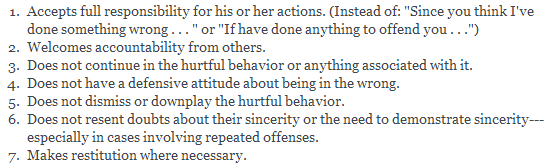
      Seven Signs of Genuine Repentance (from Steve Cornell):


      Continue to the final installment of our series, 'Beyond Justice'...
      Creative Commons License
      By Their Strange Fruit by Katelin H is licensed under a Creative Commons Attribution-NonCommercial-NoDerivs 3.0 Unported License.
      Permissions beyond the scope of this license may be available at @BTSFblog