On Fridays, BTSF offers links to other discussions about race & Christianity. It's an opportunity for you to read about racial justice & Christianity from other perspectives, and for me to give props to the shoulders on which I stand...
These are some of BTSF's links of interest this week. What are yours?
Feel free to contribute your own links in the comments section, or submit items you feel should be included during the week. Self-promotion is encouraged.
A 7-year-old, special-ed studentwas handcuffed after becoming upset during an Easter-egg decorating activity. The police were called, and they escorted the boy from the school before his mom was able arrive to take him home. She felt "it's like they're trying to get rid of him." The NYPD defended their action, saying that the boy was "acting in a threatening manner."
A 12-year-old faced misdemeanor charges after refusing to clean up his spilled milk in the school cafeteria. The five-foot, 100-pound 6th-grader was tackled by a police officer after belligerence and 'talking back.'
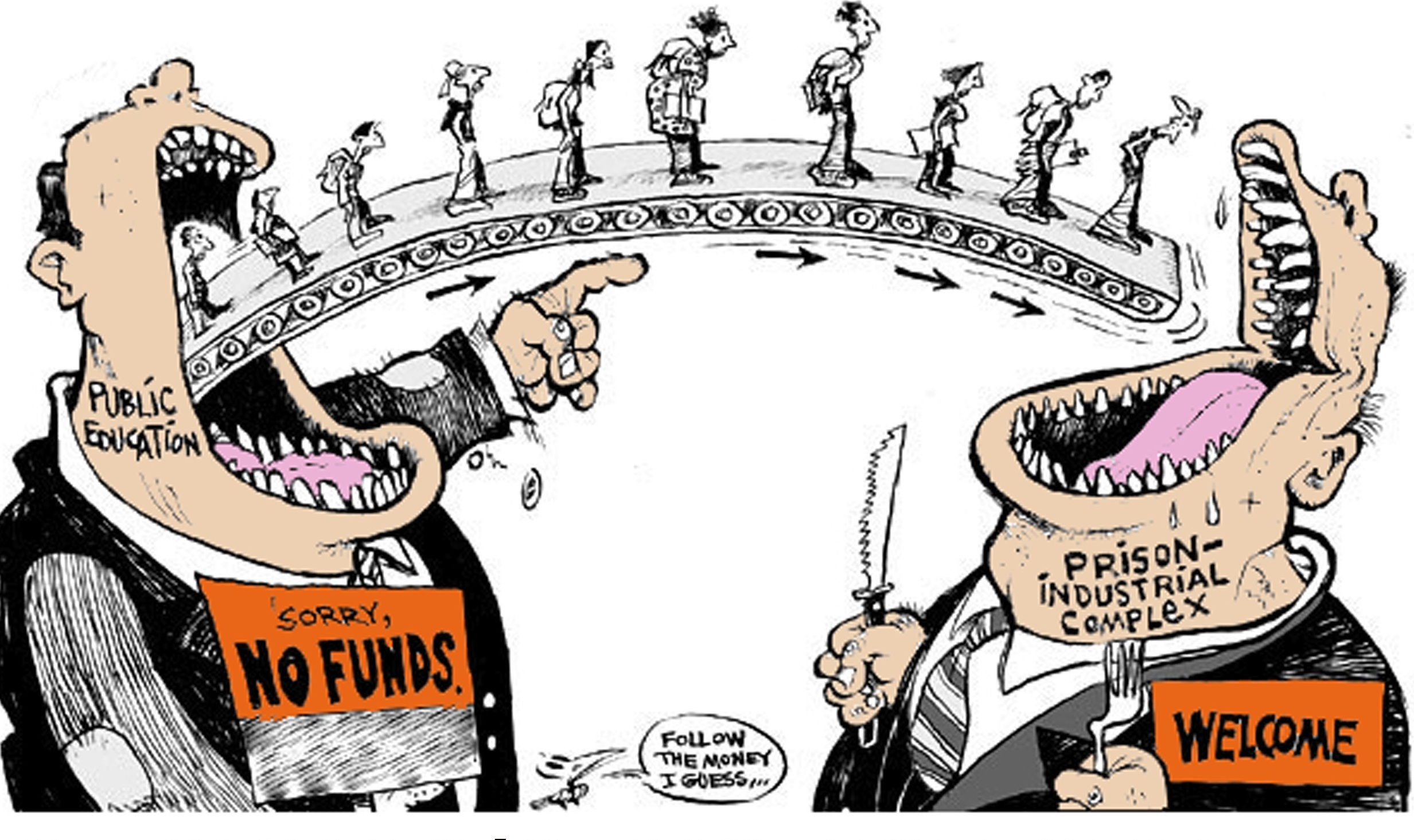
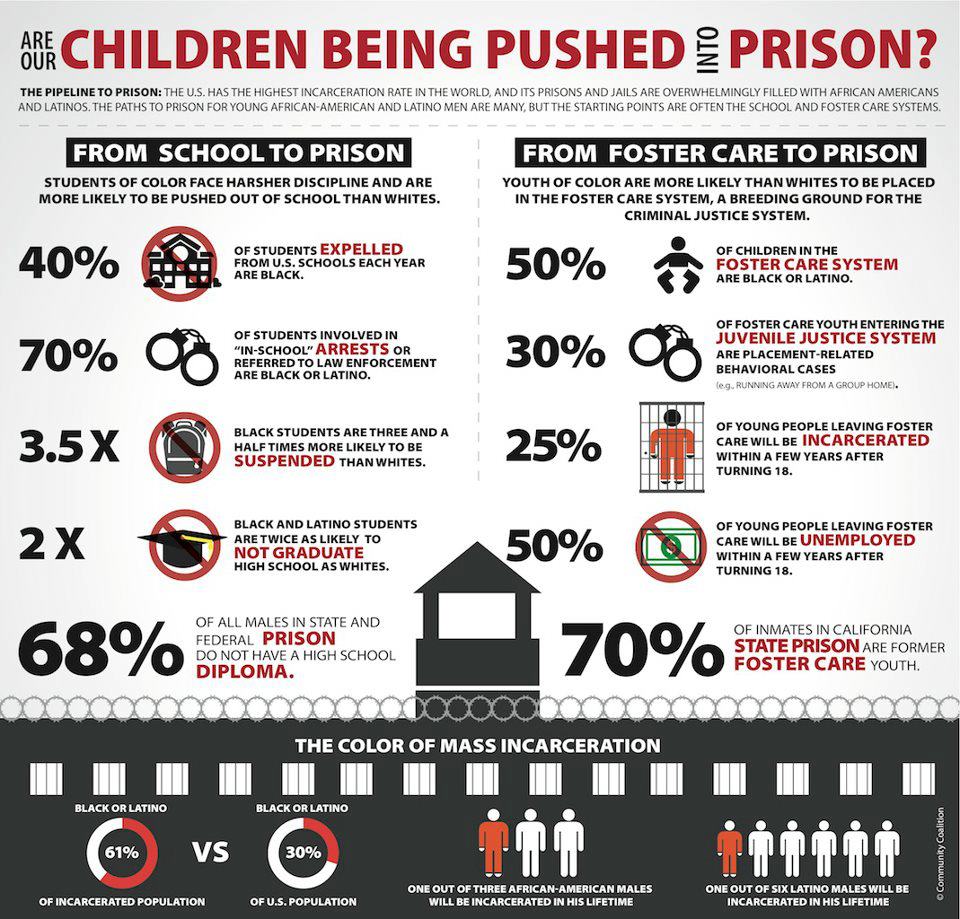
Black and Latino children are much more likely to be suspended, expelled, or arrested than their white compatriots for the same conduct. The National Education Policy Center has found that most suspensions are against Black students, and that ~30% of Black males in middle school have been suspended at least once. Furthermore, schools that are comprised of large Black and Latino student populations are more likely to be targeted by building searches. These trends in schools closely parallel the profound racial disparities seen in arrests and prosecutions in the adult word (see post: Incarceration: The New Jim Crow).
While the children in each of the above examples were indeed misbehaving in school, there is question as to whether the involvement of law enforcement was necessarily in each case. Adults are naturally given authority over children, but those adults hold the same biases and stereotypes that affect us all. As a consequence, children of color lose the right to due process at a early age because the 'truth' is assumed to the version told by their teachers and principles.
For this reason, the United States Justice Department recently released an investigation finding that the constitutional rights of school children are being violated. They report that "children arrested in local schools become entangled in a cycle of incarceration without substantive and procedural protections required by the U.S. Constitution." Thomas E. Perez, Assistant Attorney General for the Civil Rights Division asserts that “the systematic disregard for children’s basic constitutional rights by agencies with a duty to protect and serve these children betrays the public trust.” The specific rights violations committed by the Mississippi law enforcement division that was investigated include:
"Failure by MPD to adequately assess probable cause that an unlawful offense has been committed prior to arresting children at local schools;
Failure by the Lauderdale County Youth Court to provide children with proper procedural due process, including by making untimely and inadequate probable cause determinations;
Failure by the Lauderdale County Youth Court and the Mississippi DYS to provide children procedural due process rights in the probationary process, especially with regard to alleged probation violations; and
Failure by all entities to ensure substantive due process for children on probation by incarcerating children for school disciplinary offenses without any procedural safeguards."
Often, arrests are made in response to non-violent offenses like 'disruptive conduct' or 'disturbance of the peace;' essentially, children are being criminalized for throwing temper tantrums. According to the ACLU, "students have been arrested for throwing an eraser at a teacher, breaking a pencil, and having rap lyrics in a locker."
In response to horrifying school shootings, the national instinct is to increase security forces in public schools (see post: The Pathology of Mass Shooting). Alan Singer suggests that "public fear of school violence was ignited by the Columbine shootings in 1999. Although the perpetrators were white and the incident had nothing to do with race, black and Latino students in inner-city schools increasingly became the target of the anti-crime, anti-violence programs." We buy into the media narrative of rampant gang violence and drug peddling on school property, which feeds into our hyper-vigilance.
But the heightened security is often misdirected. Across the country, suspension are on the rise, particularly as a punishment for dress-code violations, and cellphone use/possession. What once called for a trip to the principal's office, is now cause for arrest. Administrators meet teenage defiance with drawn weapons and handcuffs. Singer reports that "97 percent of the suspensions were for minor infractions that could have been treated as educational rather than disciplinary problems," according to the Council of State Governments Justice Center.
Check out the videos below for more compelling stories of child-arrests, and stay tuned next week for a look at the polices that perpetuate the school-to-prison and the lasting consequences it has on our children.
From the ACLU: Should disorderly conduct or disruptive behavior be enough to warrant arrest? How would you feel if you or your child were arrested at school? Have you ever seen any instances of the school-to-prison pipeline operating? Continue to part 2...
On Fridays, BTSF offers links to other discussions about race & Christianity. It's an opportunity for you to read about racial justice & Christianity from other folks, and for me to give props to the shoulders on which I stand...
These are some of BTSF's links of interest this week. What are yours?
Feel free to contribute your own links in the comments section, or submit items you feel should be included during the week. Self-promotion is encouraged.
Please welcome back guest author Ramon Mayo. Be sure to check out his new book, 'His Story, Our Story' available for Kindle and other e-readers. It's a black history devotional taking readers through 31 days of God's hand in the African American experience. Martin Luther King Jr. Day is a day set aside for us to remember and honor the achievements and the values that Dr. King stood for. But who are we truly honoring? What man are we remembering? Many times our national agenda is filled with holes, or the characters and stories are lifted out of context in order to promote another agenda, and this is certainly the case with Dr. King.
The truth is, you cannot separate King from Christ. The goals that he pursued and the methods he used to pursue them were all shaped by a desire to not only worship but to imitate Jesus Christ in a divided America. King was martyred not because he was a politically correct mascot. King was martyred because he was a disciple who was following counter-cultural principles espoused by Jesus Christ.
Some of these principles were:
Love for one’s enemies. King’s non-violent method of protest was based on the methods of Gandhi. The method was Gandhi’s, but the message was Christ’s. King found the method, but he rooted it in a Christian love ethic straight out of pages of the Sermon on the Mount:
"But I say unto you, Love your enemies, bless them that curse you, do good to them that hate you, and pray for them which despitefully use you, and persecute you; That ye may be the children of your Father which is in heaven: for he maketh his sun to rise on the evil and on the good, and sendeth rain on the just and on the unjust. For if ye love them which love you, what reward have ye? do not even the publicans the same?And if ye salute your brethren only, what do ye more than others? do not even the publicans so? Be ye therefore perfect, even as your Father which is in heaven is perfect." Matthew 5:39-48
Anti-racism, -materialism, and -militarism. King knew that these “isms” were connected and
were in opposition to Jesus’ kingdom. He saw how racism, materialism, and militarism were an evil trinity that corrupted mankind and gave his life to fighting against them. Jesus spoke out against these evils as well. Jesus’ parable of the rich fool as a warning against greed is a full on attack against materialism. His praise of Gentile faith flies in the face of racism. His blessing ofthe meek and declaration of their reward is the opposite of power hungry military might. King and Jesus were on the same page against racism, materialism, and militarism.
All human beings are made in the image of God. King as well as Jesus believed that every life mattered because all human beings were made in the image of God. There was inherent value in every human life and that is why social injustice is something to be fought against. There is no one that God does not care about and all of us are equal before God.
Although the Christian past is littered with examples of religious fanatics who used the Bible to oppress and subjugate people today, let’s remember Martin Luther King Jr. as one who chose to follow Jesus with a vision of equality and liberation for all. He was more than a mascot for a kumbayah circle of tolerance. He was a drum major for justice marching to the rhythm of Jesus the King
On Fridays, BTSF offers links to other discussions about race & Christianity. It's an opportunity for you to read about racial justice & Christianity from other folks, and for me to give props to the shoulders on which I stand...
These are some of BTSF's links of interest this week. What are yours?
Feel free to contribute your own links in the comments section, or submit items you feel should be included during the week. Self-promotion is encouraged.