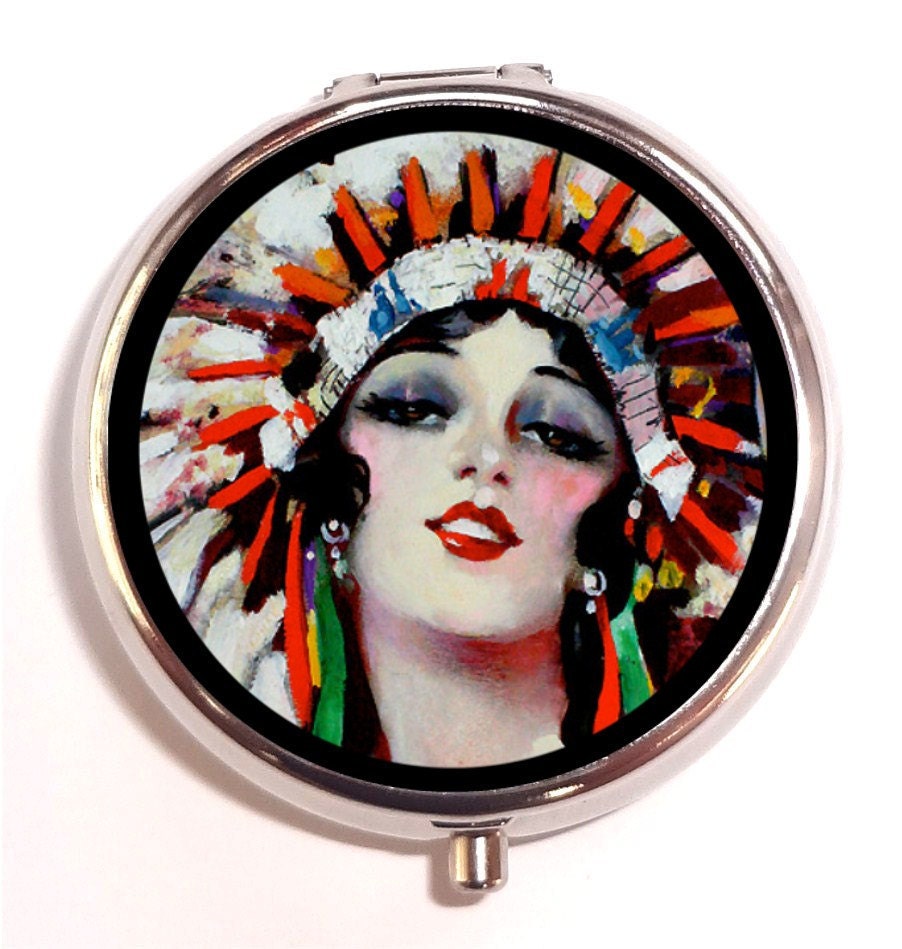
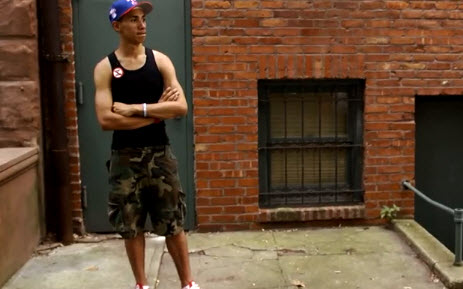
Using a culture, race, or ethnicity as a costume is not appropriate. Ever.
On Halloween, we get the opportunity to disguise ourselves as something 'other,'something different from normal, something bizarre. That people of color might be one of these costume options is tragic and offensive.
Halloween outfits basically come in three flavors: scary, funny, or fantasy. Real cultures shouldn't fit into any of these categories. By using people's identities as costumes, we imply that they are 'not one of us,' or not even fully human, belonging instead to the realm of ghouls and goblins.
In the U.S., we spend the entire year marginalizing POCs, maintaining low visibility on TV, in movies, and in the media, but then suddenly become hyper-interested in 'appreciating culture' for one offensive night (as though dressing as a Hollywood version of what you think a culture is has anything to do with appreciating it).
When we claim that it's all 'good harmless fun,' we reveal our privilege never to have to face the consequences of such stereotypes in our own lives. We reveal the power we hold to dictate who defines 'harmless' and 'fun.' We reveal how loudly our own voices are heard, even as we silence others. We reveal our capacity to imagine fantasy worlds for real cultures, while ignoring the historical baggage that makes us feel uncomfortable.
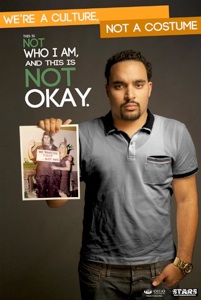
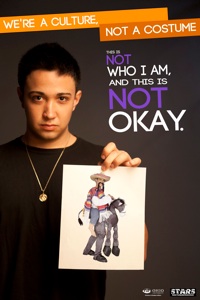
Students Teaching About Racism in Society (STARS) at Ohio University began a poster campaign to educate folks about the hurtful nature of racist costumes with the slogan "we're a culture, not a costume." All of the costumes they depict are real, and are perennially reprised They get big props for concisely and clearly communicating what many of us have been frustrated with for years.
Also, check out this great video in which Franchesca Ramsey eloquently and hilarisiously explains the issues with these types of costumes:
Maxine Naawu joins us onceagain to share her thoughts on the difference between 'appreciation' and appropriation. Among many other things, she blogs about art, film and photography at Side Hustle Stories and hosts her own artistic work at her website.
Every fall,
it’s easy to find examplesof
culturally insensitive Halloween costumes. They may be intended “just for fun,” but in practice, end up
stereotyping, mocking, and or disrespecting of other cultures. There have been
several posts on this blog and others describing why such images are especially harmful for those not in the majority because of the limited images of us in
general in society. However, it doesn't have to be Halloween for someone to be
culturally insensitive in their use of elements of another culture. Consider
the following examples:
A white, non-muslim woman wore a head covering for a day in order to help understand the
struggles of veiled Muslim women. She wrote a heartfelt post detailing how she
finally understood the discrimination Muslim women go through. Her post
received a mixed response (some positive, some negative) from many Muslim women bloggers and allies. Also recently, a blog by a white woman chronicling her adventures while wearing a costume afro wig got a lot of negative attention from the black blogosphere and natural-haired black women. The
author gushed about how the fro “changed her life” and helped her channel a
sense of openness and “fun” in her everyday life. This was also derided as an
insensitive act of appropriation. While these women may
have thought they were appreciating different cultures, they ended up actually
hurting others. The women in these cases both have something in common -- they
claimed they were trying to appreciate the experiences they were borrowing
from, and trying to understand it in a better way. “But,” one might say,
“ isn't getting a better appreciation for other races and cultures struggles the
entire point of blogs like this? Why should someone’s effort to do so be
attacked?” I understand that the
outrage in response to these efforts to reach out might dissuade others from
reaching outside their own racial and cultural comfort zones. However, it’s
worth examining why these efforts ended up hurting the people who were supposed
to be “appreciated.”
Here are some ways you
can avoid making the mistakes they made:
1. Credit the Source Arguably, the most
offensive form of appropriation is when a person uses an aspect of someone
else’s culture without acknowledgement of the source, especially when that
person is profiting off of that stolen aspect of culture.
One example I often
see is the appropriation of the Hindu religious festival Holi’s tradition of splashing
colorful powder and paint on people as a celebration of springtime. This
celebration often results in beautiful photography, but I often see artists
using similar techniques with zero credit to its origins. It would
be like, for Christians, as if wearing a pretend crown of thorns and fake
stigmata became a fashion trend, and the people selling this crown didn't acknowledge its source or significance. In this case, “appropriation” could just
as easily be called “stealing” if the artist is trying to act as if the
cultural technique being used is something new and original, rather than
something done by others hundreds of years earlier. This form of “appreciating”
is actually offensive because it turns what was significant to many into just
another thing to be consumed by the majority, and renders those originally
attached to that piece of culture invisible. Crediting the source
doesn’t automatically make borrowing from another culture ok, and in some cases
it isn’t possible. That’s why it’s important to follow the next step: 2. Educate yourself first
If you’re using another
culture in your
art, wardrobe, worship celebration, etc, it’s important to not only credit that culture, but to do
research on whether you are using it appropriately (or should be using it at
all). One great example is the use of Native American headdresses in art, specifically on women. These headdresses are
traditionally worn by men for specific religious, historical, and cultural
reasons, and their use by those who haven’t earned the privilege is considered
offensive, and
culturally they are never/rarely worn on women. Yet it’s often done. Even when crediting the source (and
without educating yourself, how would you even know how to properly credit? “Native
American” is far too general) use of this headdress for artistic purposes would
be offensive.
Some self-education by
Michelle, the white woman wearing an afro wig to bring some “fun” into her
life, would have taught her about the long standing issues with black women and
natural hair, the struggles of going up against western beauty standards, and
the fact that many black women are pressured away from wearing their hair in
their natural “afro” state in order to keep employment. She was enjoying the
“fun” of having natural hair without knowing a single thing about the
struggle behind it, which is at the very least, insensitive. In this particular
case, hundreds responded to her blog and explained to her why her actions were
offensive, but she doesn’t quite get it yet. Educating yourself also
keeps you from perpetuating stereotypes about the culture you’re borrowing
from. Michelle made jokes about going to a fried chicken festival, and changed her
personality to match what she thought being a black person was like. Many
Halloween costumes people wear to ‘embrace’ another culture are, in reality,
simply offensive stereotypes. The fact that minority cultures in the U.S. are
much more harmed by these stereotypes is just one of many reasons to remember the next step...
On Fridays, BTSF offers links to other discussions about race & Christianity. It's an opportunity for you to read about racial justice & Christianity from other folks, and for me to give props to the shoulders on which I stand...
These are some of BTSF's links of interest this week. What are yours?
Feel free to contribute your own links in the comments section, or submit items you feel should be included during the week. Self-promotion is encouraged.
Discrimination and intimidation at the polls is nothing new. Our country’s voting history is fraught with poll taxes, literacy requirements, racial gerrymandering, and voter intimidation (all of which were legal in our lifetime — or at least our parents’). Indeed, as I describe, many of these injustices are still practiced in one form or another today.
Both modern and historic laws use carefully coded language to allow for legal discrimination, without ever explicitly mentioning race. When poll taxes were legally in use, they often came with a grandfather clause that allowed citizens whose ancestors had voted in the years before the civil war (you know … before the abolition of slavery) to forgo the tax.
The implications for such a legacy are profound. Years of disenfranchisement leads to a foundation of legal precedent and accumulated power that perpetuate disparity and injustice. It’s no coincidence that that the Senate is still 96 percent white. As Christians, we know God says to “choose some wise, understanding and respected men from each of your tribes, and I will set them over you” (Deuteronomy 1:13), but some groups are still embarrassingly absent from our leadership.
What effects might this disparity have on controversial or racially veiled legislation moving forward? Even assuming no intentional prejudice, surely we can’t presume that homogeneous legislatures have full understanding of the needs of their constituents of color.
The Truth About Voter Fraud
As Christian voters we have an obligation to “discern for ourselves what is right; let us learn together what is good” (Job 34:4). It’s true that there are cases in which voter fraud has been a problem, but these cases most often occur in the context of absentee voting, a scenario that is not at all helped by the requirement of a photo ID at the polls.
While some of the newlegislation has been struck down, others remain up for debate and it’s important to inform ourselves about the effects of the legislation. If you haven’t registered for this year’s election, do so. And educate yourself about the ID requirements in your state.
If you’re already registered and ready to go, help some who aren't in that same position. On Election Day, join with other believers to unite around the communion table as a way of practicing our common bond in Christ amid our theological, political, and denominational differences. And on that day, consider giving of your time to make sure every citizen can cast a vote safely and legally.
What do you think of voter ID laws? Share your view in the comments section below.
On Fridays, BTSF offers links to other discussions about race & Christianity. It's an opportunity for you to read about racial justice & Christianity from other folks, and for me to give props to the shoulders on which I stand...
These are some of BTSF's links of interest this week. What are yours?
Feel free to contribute your own links in the comments section, or submit items you feel should be included during the week. Self-promotion is encouraged.