BTSF in chronological order (most recent articles appear first):

Sunday, June 7, 2015

Color of Christ: White Jesus?

Revisiting this post...because apparently we need to. 

Book cover: The Color of Christ (Black boy seated under a painting of white Jesus)What race was Jesus? How has our perception of His appearance changed over time? Edward J. Blume and Paul Harvey's new book The Color of Christ: The Son of God and the Saga of Race in America deals with such questions.

If asked, most people will acknowledge that Jesus was not the blue-eyed, wavy-haired man of Sunday School fame. Nevertheless, this imagery persists as the most common depiction of Jesus produced by media, and indeed, by churches.

White Jesus readily comes to mind in conversations, and presumably even in moments of prayer or worship. When shown several pictures of Jesus in a variety of ethnicities, Christians  "accepted the visual material intellectually, but not emotionally."(p. 251) Indeed "to imagine Jesus as other-than-white would demand a conscious process of unlearning." (p.15)

Google images return for 'Jesus' gives all white Jesuses
Jesus is white, because
Google knows everything. 
Often we contradict ourselves in the Church: "we have learned to insist with our denomination that Jesus indeed has no color, that the gospel is colorblind, and that God makes no distinction among people. Yet if we look closely, the Jesus we have embraced is too often a White Jesus." (p. 228)

Images are powerful, and take hold more readily than politically-correct rhetoric and diversity seminars. The authors observe that "civil rights, [and] cultural pluralism...led these whites to change verbally but not materially. The result was that the white Jesus and white privilege were denounced by everyone, but they remained as still-powerful material realities." (p. 250)

Why has this version of Jesus remained so prominent in our collective subconscious? Because "making Jesus visually, and marketing him through the land took time, capital, and freedom. Access to technology and social resources as never been equal and the inequalities have been a factor in what images of Jesus have been created and how they have obtained cultural authority." (p.17) Even those who have given up on white Christians have not always been able to yet relinquished the idea of a white Jesus.
Popular painting of white Jesus
He sure look white to me...

If Jesus is white is so many minds, how does the behavior of white folks taint the representation of Him? I'm not sure white folk should want Him associated with their actions. Indeed, from early on in American history, the contradiction has caused many to reject a God touted by such a cruel race.

Some have been able to accept Jesus, while not adopting his whiteness. There have been many movements to either de-color, or to re-color the Christ. Liberation theologists, among others, have produced Asian Jesus, Chicano Jesus, Yogi Jesus, Black Jesus, and scholars have used forensic archaeology to discern Jesus's 'true appearance.'

Jesus: white and dreamy
These depictions have met with significant resistance from a white community too quick to make God in their own image. One of John Henrik Clarke's stories depicts a boy who is severely reprimanded for painting a picture of a black Jesus, but the boy asserts he did so because Jesus "was so kind and forgiving, kinder than I have ever seen white people be." (p. 220) Almost 25 years later, the movie Dogma noted that "a black man can steal your stereo, but he can't be your savior." (p.274)

Today, the tradition continues. The authors observe that '"new movies and television shows rendered Jesus as white without proclaiming it or defending it. They allowed Americans to adore and cheer a savior in white skin as they professed to believe in a God that did not discriminate." (p. 255)

What are the consequences of the predominant perceptions of a white Jesus? Theologians have noted that "if we accept a White Jesus, if that is the image we see, we have also adopted an image of salvation, of health, wholeness, happiness, that also comes to us via a White culture and comes to us with a White value system." (p. 228) This imagery reinforces the 'white savior complex' and perpetuates the tenancy of white folk to view themselves as morally superior to other groups.

Diverse children....white Jesus
Blume and Harvey's scholarly look at the racialized history of the Christ provides an academic and historical perspective on Christian imagery. The book is deliberate as it marches through it's chronicle, but its best strengths are the many stories of individuals who have wrestled with the image of Jesus along the way. Through this lens, we understand that Christ has long been co-opted by those in power, in much the same way that He is used for political gain today.

One is left with a question of what to do with all of their well-researched information. Where do we go from here? And how does this history change our actions today? I suppose these sorts of questions are left to we as the readers to fully examine in our own lives.

Thursday, June 4, 2015

Friday Fruit (06/05/15)

On Fridays, BTSF offers links to other discussions about race & Christianity. It's an opportunity for you to read other perspectives, and for me to give props to the many voices leading the way...


Weekly Round Up:

These are some of BTSF's links of interest this week. What are yours?

Feel free to contribute your own links in the comments section, or submit items you feel should be included during the week. Self-promotion is encouraged.

Sunday, May 31, 2015

They Will Know We Are Christians*

Too often, communities of color find it difficult to differentiate between white Christians and white non-Christians when it comes to issues of racial justice. In his co-authored book More Than Equals, Spencer Perkins observes that:
Book cover: More Than Equals. Picture of authors Spencer Perkins and Chris Rice“White Christians’ decisions to choose the comfort of their own race over the Christian ideals of brotherhood and oneness that our gospel so boldly preaches have undoubtedly weakened their witness to the African-American community.”

His convicting statement reflects the reality that, in racialized debate, people of color feel they cannot count on their white Christian sisters and brothers to have their back.

Too often in moments of racial controversy, the white Christian response to those hurt by such events has been either muted, late, or nonexistent, leaving the marginalized to wonder if our sermons about unity and diversity were just for show. True, some folks may take a stand, but often they act (and are perceived) as individuals, rather than as representatives of Christ and his Church. As a body of believers, we distance ourselves from controversy, and we fail to manifest Christ’s love in solidarity. At our worst, we add to the voices second-guessing the cries of racism.

Tshirt: "They will know we are Christians by our t-shirts"
Yet we know from scripture that we are to “learn to do good; seek justice, correct oppression,” and “to loose the chains of injustice and untie the cords of the yoke” (Isaiah 1:17, 58:6). If we are to be the Body of Christ, we have to understand that the reconciliation for which our souls long cannot come without the justice that our racial brokenness requires.

After all, isn’t that the miracle of Christ? That “we have now been justified by his blood” (Romans 5:9), as a gift from God “who reconciled us to himself through Christ and gave us the ministry of reconciliation” (2 Corinthians 5:18). In his death and resurrection, Jesus accomplished both perfect reconciliation and perfect justice, both of which are necessary for the redemption of a broken world.

So too must we achieve reconciliation through acknowledging racial injustice, followed by action against it. This means going beyond proclamations of unity and community, and gaining a willingness to bear with each other’s burdens.

"They will know we are Christians by our doctrine [crossed out], by our love.We can start by educating ourselves about the issues important to our sisters and brothers of color. Listen. Don’t argue, don’t try to refute. Begin to un-train the years of learned biases. Grow churches that are places of sanctuary, where all can be confident that their voices will be heard and their concerns will not be dismissed.

Once we commit to educating ourselves and bearing with each other, we then must become active agents of change in our communities. We become the first to speak up against injustice and ignorance. We initiate partnerships, and support the efforts of racial reconciliation initiatives already in place. We show up, we participate, and we make our voices heard.

Book cover of Kingdom ComeAnd then we will be different. Then we will bear witness to the power of Christ for justice and reconciliation in today’s world.

In his book Kingdom Come, Allen Wakabayashi asserts, “the world needs to see that our faith really does make a difference for life, especially as we deal with some of the most vexing social struggles, like race, gender, and class suppression.”

As we go through our daily lives, are we living the witness of Christ when it comes to racial justice and reconciliation?

Do we bear the same fruit as the rest of the world or are we different?

Do they know we are Christians?


*This post originally appeared on BTSF on March 5, 2012

Friday, May 29, 2015

Friday Fruit (05/29/15)

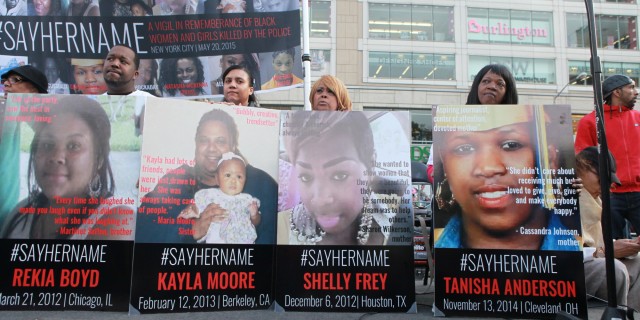
#SayHerName ProtestOn Fridays, BTSF offers links to other discussions about race & Christianity. It's an opportunity for you to read other perspectives, and for me to give props to the many voices leading the way...


Weekly Round Up:

These are some of BTSF's links of interest this week. What are yours?

Feel free to contribute your own links in the comments section, or submit items you feel should be included during the week. Self-promotion is encouraged.

Sunday, May 24, 2015

Learning from the Students: Activism Past and Present

Black students sitting at the counter at Woolworths in GreensboroThis post originally appeared on the blog of UMC Collegiate Ministry:

There is a great tradition of student- and youth-led activism in the United States. But we are often tempted to romanticize bygone eras, thinking today's efforts are lackluster in comparison. But there are striking parallels between today's student racial justice movements and those of our history--including in how they are perceived by the dominant culture of their day.

On February 1, 1960, having stayed up late in their dorms discussing recent personal racial indignities they had faced, four college freshmen decided to stage a lunch counter sit-in in Greensboro, NC. That evening, they returned to campus and recruited even more students to join them at the Woolworth's five-and-dime the next day. The movement grew daily with students from the many surrounding universities taking part. By the 4th day, more than 300 people had joined in, and the tactic had caught on across the country.

Comparing images from the 1960s and today
Click to enlarge
Shortly thereafter, inspired by the efforts in Greensboro, the Student Nonviolent Coordinating Committee (SNCC) was founded (though to that point many independent actions had been staged without the need for a formal organization). The student movement was careful to maintain its independence from the established leadership of Martin Luther King Jr. and the Southern Christian Leadership Conference (SCLC), They partnered on many events, but they were their own organization. SNCC, and other student groups like it across the country, placed a high value on consensus building and participatory democracy, avoiding centralized leadership and 'top down' control.

When the Freedom Rides began, they were initially sponsored by the Congress of Racial Equality, but when the buses were violently attacked in Alabama, the action was put on hold . It was the students that resolved to finish the ride, at great risk to themselves, allowing the movement to grow.

Time and again over the years of their work, the youth were told that their methods were foolish, that they were being too radical, that they should be more patient and work within the system. They were often told to tone down their language and to speak and act calmly. Instead, they continued to disrupt daily life for every-day citizens across the country. They tormented local businesses, costing them significant revenue. They broke laws, they disrespected authority.

Students gathering at a planning meeting in the 1960sTo show the outrageous use of force that the established power was willing to inflict, these youth risked prison, police violence, and death. They leveraged new media technology so that the nation could see these actions play out in living color on their own television sets.

Of note, even though SNCC eventually came to see him as the 'old establishment' of the movement, Dr. King himself was only 26 when he led the Montgomery bus boycott, having only just finished graduate school earlier that same year. What if the Church had decided he was too young to lead? What if they had dismissed him and asked him come back when he had more experience?

Dr. King wasn't even 30 years old when he helped found the Southern Christian Leadership Conference (SCLC). Indeed, he was 27 when his house was bombed by the KKK. Malcolm X was 28 when he was appointed to Mosque No. 7 in New York. The same Civil Right movement that we sometimes remember as mature or stoic, was in reality young, passionate, and vibrate. Much like our youth movements today.

Crowd of students with hands up. Sign: "I am a human. Don't shoot"
Today, we have groups like the Ohio Students Association, which has led the protests for John Crawford (as well as for police reform across their state).  We have Ferguson Action, which leverages the emerging media of today's world to spread the growing protest movement.

Instead of sit-ins, they're hosting die-ins. Instead of buttons, they're using hashtags. And like those four freshmen in Greensboro, their actions are not the result of years of training, but rather spring out of felt need in the moment. Like their predecessors, they too are also being told they are too radical, too disruptive. They too are being told to step down and go quietly.

Like SNCC and others, our young activists today also express a wariness of the establishment and of the old methods of protest that may have run their course. Their fresh perspective is helping innovate and to creatively construct next steps for us to take as a nation.

Medical students in white coats lying on the floor in a 'die in'And like those that came before them, today's students are making tremendous personal sacrifices for the sake of the movement. We must remember to listen closely to what they have to say. After all, the very Lord and Savior who died for our sins, was barely 30 when he did so. Was He too young to lead??

We must trust the observations of our young movement leaders and learn from their lived experiences. Otherwise, we might never even realize we've let the movement pass us by.
Creative Commons License
By Their Strange Fruit by Katelin H is licensed under a Creative Commons Attribution-NonCommercial-NoDerivs 3.0 Unported License.
Permissions beyond the scope of this license may be available at @BTSFblog