BTSF in chronological order (most recent articles appear first):

Friday, February 7, 2014

Friday Fruit (02/07/14)

Mark Duggan
On Fridays, BTSF offers links to other discussions about race & Christianity. It's an opportunity for you to read about racial justice & Christianity from other perspectives, and for me to give props to the shoulders on which I stand...


Weekly Round Up:
    These are some of BTSF's links of interest this week. What are yours?

    Feel free to contribute your own links in the comments section, or submit items you feel should be included during the week. Self-promotion is encouraged.

    Sunday, February 2, 2014

    That Mascot Doesn't Honor Anyone

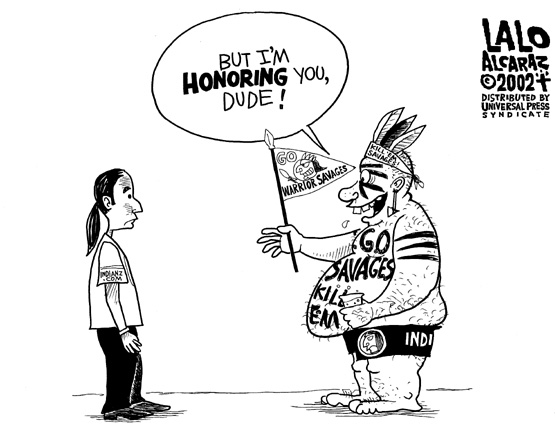
    During this football season, folks in DC have been clamoring for their Washington R****ns' victorious return to the city.* But mayor Vincent Gray has raised familiar concerns, stating the franchise would need to seriously consider changing the team's name and mascot before planning a move.

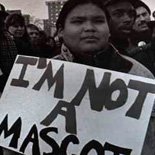
    Mayor Gray's statements have reignited debates over the use of American Indians as sports mascots. Though there are, of course, varying perspectives within the many diverse native communities, this practice has long been decried as inappropriate.

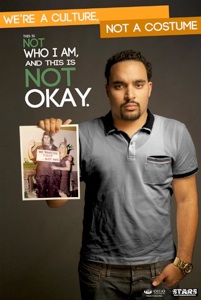
    The Washington mascot, and the many like it, rely upon caricatured stereotypes of a broad groups of people that have been historically subordinated. These negative images are promoted for the entertainment and profit of the dominant culture.

    The consequences are real. In 2005, the American Psychological Association released its 'Resolution Recommending Retirement of American Indian Mascots,' which cited the many "harmful effects of racial stereotyping and inaccurate racial portrayals, including the particularly harmful effects of American Indian sports mascots on the social identity development and self-esteem of American Indian young people."

    Given that most such mascots are associated with schools, we should be particularly vigilant. But as of 2006, over 2,500 elementary and high schools use American Indian mascots. Thus, at a early age we promote the idea that stereotyping marginalized groups is acceptable.

    Sports fans routinely claim they are 'honoring' Native American cultures by painting their faces red and sticking plastic feathers in their hair.  But perhaps if we truly wanted to honor indigenous cultures, we would begin by honoring their repeated requests to cease and desist with such mockeries. If we really wanted to honor, perhaps we would take the time to learn the true historiescultures, and stories, rather than promoting monolithic and inaccurate images. If we honestly wanted to honor, we might show interest beyond the moments in which we are simply interested in appropriating for our own gain.

    Of the most common sports mascots, most are animals (Eagles, Bears, Falcons, Lions) or objects (Rockets, Jets, Sox, Rockies). What does it say when we add to this list teams like the Chiefs, Braves, and Indians? Even when other human beings are used as mascots, it is as a profession, not as a race or ethnicity itself (Packers, Steelers, Cowboys).

    People of color are often otherized to the point of being not fully human. We see the manifestations of this tendency is the use of people as props in advertisements (links NSFW), and as Halloween costumes. When we lose our compassion for each other as fellow human beings, objectification and dehumanization facilitate violence and the devaluation of life.

    Some of the ease with which we employ such objectification speaks to the invisibility of native cultures within our daily lives. Would you paint your face black, wear an afro wig and prance around the football field trying to imitate your perceptions of black people? Would you lead a pep rally including a fake communion ceremony and selling plastic toy crucifixes as souvenirs?

    Given the history of white culture's relationship with American Indian populations, continued profit through the use of caricatured imagery seems particularly heinous. Yet it is all too commonplace. It ushers an environment where it is appropriate for opposing teams to shout things like "hey, Cowboys, finish off those R*dskins" or "Kill the Indians!”

    And yet, as a nation, we continue to cling to our mascots like graven idols. We cite years of tradition, argue that offense wasn't intended and so it shouldn't be taken. But ultimately, majority culture shouldn't get a say. It's not about pleasing the crowd's desire to be entertained. We have been repeatedly asked to cease our behavior and yet we have patently refused. Indeed, “when someone says you are hurting them by your action, if you persist – then the harm becomes intentional.”

    What does that say about our heart for our neighbor? This neighbor from whom we've stolen land and maligned for generations. The issue of sports mascots is one small piece of a much larger network of injustices against American Indian nations. Most of these issues continue to be ignored or ridiculed.

    We need to consider seriously what is at stake when we prioritize our own team pride over the humanity and respect of our sisters and brothers. Are we really more loyal to a mascot than to the reconciled body of Christ?


    Have you attended a school that uses imagery of American Indian stereotypes as a mascot? How would your community react to calls for change? What would be your witness? 

    Take a look at this great video that drives the point home (but check out this commentary as well):


    *Due to its use as a racial slur, BTSF and others choose not to employ the official name, out of respect for those traditionally targeted by the term. 

    Thursday, January 30, 2014

    Friday Fruit (1/31/14)

    Cheerios doubles down with another
    super-cute Super Bowl commercial 
    On Fridays, BTSF offers links to other discussions about race & Christianity. It's an opportunity for you to read about racial justice & Christianity from other perspectives, and for me to give props to the shoulders on which I stand...


    Weekly Round Up:
      These are some of BTSF's links of interest this week. What are yours?

      Feel free to contribute your own links in the comments section, or submit items you feel should be included during the week. Self-promotion is encouraged.

      Sunday, January 26, 2014

      Fred Korematsu Day

      On January 30th, we celebrate 'Fred Korematsu Day of Civil Liberties and the Constitution,' in honor of his birthday. Korematsu (是松 豊三郎) is the first Asian American to have a day named after him.

      Korematsu was living in California when Franklin D. Roosevelt issued Executive Order 9066 in 1942, stripping American citizens of their legal rights, and allowing their indefinite imprisonment without due process. Thousands of Americans of Japanese descendants were removed from their homes and detained in internment camps (See post: Racial Profiling and the Japanese American Internment). Having broken no laws, hundreds of thousands suffered the undue loss of their freedom and property.

      Rather than surrender to military detention, Korematsu went into hiding, only to be captured and arrested several weeks later. He contested his detainment as unconstitutional, but in their 1944 ruling on Korematsu v. United States, the Supreme Court of the United States upheld the constitutionality of  Executive Order 9066.

      It was later shown that during the course of the proceedings, Solicitor General Charles Fahy suppressed legal documents that stated "there was no evidence Japanese Americans were disloyal, were acting as spies or were signaling enemy submarines." Through it all, white Americans either voiced support for the internment program or simply remained silent. Indeed, the ACLU largely sided with the FDR administration.

      Korematsu and his family were eventually sent to the Topaz internment camp, where he had a horse stall for his living quarters. He was forced to work long hours in the labor fields, receiving $12/month. After his release, Korematsu was still strapped with a federal conviction, affecting his ability to get work, even above the racial discrimination faced by his peers.

      Having spent his early years as shipyard welder aiding in the defense of the USA, he worked welding water tanks in Utah. He soon learned he was being paid only half of what his white colleges were earning. After asking for equal pay, he was threatened with arrest and was forced to leave his job.

      Receiving the
      Presidential Medal of Freedom
      Four decades after his arrest, Korematsu's conviction was finally vacated. To the judge, he said "According to the Supreme Court decision regarding my case, being an American citizen was not enough. They say you have to look like one, otherwise they say you can’t tell a difference between a loyal and a disloyal American....I would like to see the government admit that they were wrong and do something about it so this will never happen again to any American citizen of any race, creed, or color." He continued, "If anyone should do any pardoning, I should be the one pardoning the government for what they did to the Japanese-American people."

      Though his name was cleared as an individual, the 1944 Supreme Court ruling in favor of Roosevelt's Executive Order 9066 still stands today. In Korematsu's words, "As long as my record stands in federal court, any American citizen can be held in prison or concentration camps without a trial or a hearing. That is if they look like the enemy of our country."

      After September 11, 2001 Korematsu fervently urged the public not treat American Muslims as Japanese Americans had been treated during WWII. He also spoke out against detainments in Guantanamo Bay, maintaining that “full vindication for the Japanese-Americans will arrive only when we learn that, even in times of crisis, we must guard against prejudice and keep uppermost our commitment to law and justice.”

      With Rosa Parks
      To his death, he maintained “I'll never forget my government treating me like this. And I really hope that this will never happen to anybody else because of the way they look, if they look like the enemy of our country.” He knew that  "No one should ever be locked away simply because they share the same race, ethnicity, or religion as a spy or terrorist. If that principle was not learned from the internment of Japanese Americans, then these are very dangerous times for our democracy."

      January 30th is Korematsu's birthday. How will you remember his legacy?

      "Don't be afraid to speak up. One person can make a difference, even if it takes forty years." 
      - Fred T. Korematsu

      Thursday, January 23, 2014

      Friday Fruit (01/24/14)

      On Fridays, BTSF offers links to other discussions about race & Christianity. It's an opportunity for you to read about racial justice & Christianity from other perspectives, and for me to give props to the shoulders on which I stand...


      Weekly Round Up:
        These are some of BTSF's links of interest this week. What are yours?

        Feel free to contribute your own links in the comments section, or submit items you feel should be included during the week. Self-promotion is encouraged.
        Creative Commons License
        By Their Strange Fruit by Katelin H is licensed under a Creative Commons Attribution-NonCommercial-NoDerivs 3.0 Unported License.
        Permissions beyond the scope of this license may be available at @BTSFblog