BTSF in chronological order (most recent articles appear first):

Monday, July 8, 2013

The Cross and the Lynching Tree (Part 2: Niebuhr's blindness)

This is the second post of a three-part series examining James Cone's 'The Cross and the Lynching Tree.'

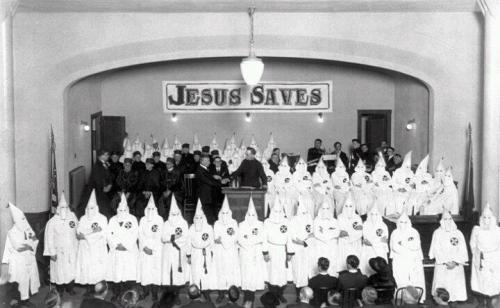
The complacency and silence of white Christianity during the Jim Crow era is uncomfortable to face. Even more so, the active participation and leadership of ‘good Christians’ in lynch mob violence. We shudder to see the Christian cross burned as a violent symbol of terror. It’s embarrassing to note the geographical overlap of lynching prevalence with the American ‘bible belt.’

It is easy, and certainly tempting, to distance ourselves from our ugly Jim Crow past. Shall we say it wasn't us in that mob? Shall we insist that had we been there, surely we would have spoken up? Surely we would have objected? “Surely not I, Lord,” "Even if everyone else abandons you, I will not." But like Peter, and the rest of the disciples, white American Christianity could not stand the test.

James Cone uses Reinhold Niebuhr, one of the most prominent American theologians of the 20th century, to demonstrate the moral failings of white Christianity in the face of lynching. Niebuhr was a liberal minded theologian with a strong awareness of the sociopolitical problems of his day. He was accustomed to viewing political issues through a biblical lens, and was sympathetic toward calls for racial justice.

Of any white Christian in that time, Cone argues, Niebuhr should have been in a position to see the connections between the cross and the lynching tree. Surely, he should have vehemently spoken out as a strong ally in Christ for black people facing violence and discrimination. But there is no such stand. In his writings, Niebuhr constantly stops short of urging meaningful change, preferring instead to keep the peace and to maintain a pace of change most comfortable for white Christians of the day.

Stephen G. Ray Jr. notes that Niebuhr is “exemplary of the tendency in 20th-century liberalism to treat the violation of black bodies by lynching as a national tragedy, but not as an ecclesial failure” Instead of observing a broad Christian moral failing, Niebuhr advocates for gradual transition, and even fails to support the integration of his own church.

In contrast, many black artists and theologians drew the parallel. James Baldwin observed that “the bulk of the white…Christian majority in this country has exhibited a really staggering level of irresponsibility and immoral washing of the hands.” (55) Some went even further to say “Not only through tacit approval and acquiescence has the Christian Church indirectly given its approval to lynch law…, but the evangelical Christian denominations have done much towards creation of the particular fanaticism which finds its outlet in lynching.” (112)

Cone uses the work of Niebuhr to illustrate the moral blindness of Christians in the Jim Crow United States. Though there were individuals and small coalitions of white Christians that spoke out, a unified Christian front was shamefully lacking.

Cone asks “what happened to the indifference among white liberal religious leaders that fostered silence in the face of the lynching industry?...What happened to the denial of whites who claimed they did not know?” (164) Has that indifference simply disappeared today? Has it resolved itself into a coalition of Christian allies confronting modern issues of racial injustice? No, the silence remains.

Continue to part three, as we explore what this legacy means for American Christianity today…

Friday, July 5, 2013

Friday Fruit (07/05/13)

Peter Cha and Rebecca Johnston
at the Summer Reconciliation Institute
On Fridays, BTSF offers links to other discussions about race & Christianity. It's an opportunity for you
to read about racial justice & Christianity from other perspectives, and for me to give props to the shoulders on which I stand...

Weekly Round Up:

These are some of BTSF's links of interest this week. What are yours?

Feel free to contribute your own links in the comments section, or submit items you feel should be included during the week. Self-promotion is encouraged.

Monday, July 1, 2013

The Cross and the Lynching Tree (Part 1)

They put Him to death by nailing Him on a tree. 

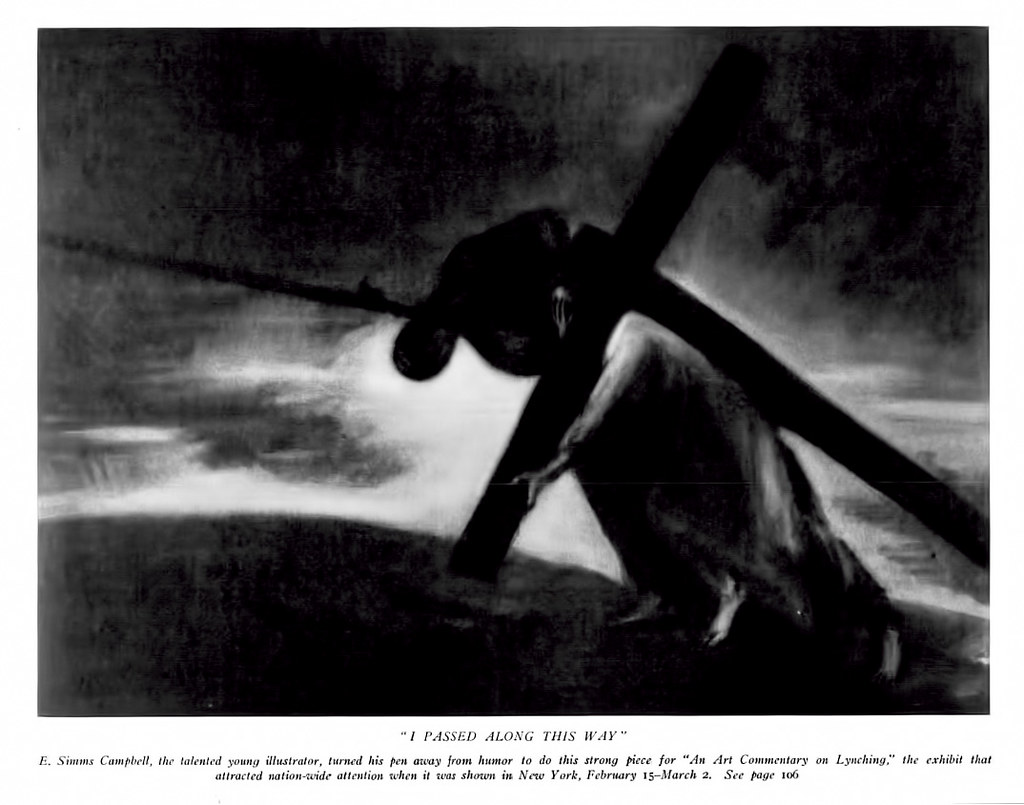
As we grapple with the meaning of Christ’s death on the cross, there may be no more vivid image for American Christians than the lynching tree upon which thousands of black women and men were murdered.

In his book ‘The Cross and the Lynching Tree,' theologian James Cone notes that “though both are symbols of death, one represents message of hope and salvation, while the other signifies the negation of that message…What is at stake is the credibility and promise of the Christian gospel.” (xiii)

In our daily lives, “the cross has been transformed into a harmless, non-offensive ornament that Christians wear around their necks,” (xiv) but “if the God of Jesus’ cross is found among the least, the crucified people of the world, then God is also found among those lynched in American history.” (23)

White Christians’ participation and silence in the midst of racialized violence, both modern and historic, is a telling indication of our allegiances and priorities. W. Fitzhugh Brundage notes that “perhaps nothing about the history of mob violence in the United States is more surprising than how quickly an understanding of the full horror of lynching has receded from the nation’s [white] collective historical memory” but that “to forget this atrocity leaves us with a fraudulent perspective of this society and of the meaning of the Christian gospel for this nation” (xiv)

Perhaps we are not self-aware enough to see the parallels between our actions and those of the crowds of Jerusalem: “as Jesus was an innocent victim of mob hysteria and Roman imperial violence, many African Americans were innocent victims of white mobs” (31) with the complicit backing of legal and executive authority. Poet Countee Cullen highlights it: “Lynch him! Lynch him!’ O savage cry,/ Why should you echo, ‘Crucify!’" (99) 

Beyond the punishment of the offender, crucifixion was a public warning to dissidents and troublemakers. Both lynching and crucifixion yielded a “a cruel, agonizing, contemptible death” that served as “public spectacles, shameful events, instruments for punishment reserved for the most despised people in society.” (161) We are reminded that “Jesus’ agonizing final cry of abandonment from the cross, ‘My God, my God, why have you forsaken me?’ was similar to the lynch victim Sam Hose’s awful scream as he drew his last breath, ‘Oh my God! Oh, Jesus.” (161)

James Baldwin observed that “the bulk of the white…Christian majority in this country has exhibited a really staggering level of irresponsibility and immoral washing of the hands.” (55) Cone notes “white theologians, then and since, have typically ignored the problem of race, or written and spoken about it without urgency, not regarding it as critical for theology or ethics” (52)

Some went even further to say “Not only through tacit approval and acquiescence has the Christian Church indirectly given its approval to lynch law…, but the evangelical Christian denominations have done much towards creation of the particular fanaticism which finds its outlet in lynching.” (112)

The result was a weakened gospel, and a broken witness of Christ’s love for the world: “Like most blacks of her time [Ida B.] Wells dismissed white Christianity as hypocrisy.” (131) In her view, “our American Christians are too busy saving the souls of white Christians from burning in hellfire to save the lives of black ones from present burning in fires kindled by white Christians.”

Even those disagreeing with her indictments, can see the deep stain of mistrust and alienation that resulted from white Christianity’s absence from racial allyship. “White conservative Christianity’s blatant endorsement of lynching as a part of its religion, and white liberal Christians silence about lynching placed both of them outside Christian identity.” Thus, “The lynching tree frees the cross from the false pieties of well-meaning Christians” (161) The message that was sent was that some lives, some souls, were less worthy, less precious, less deserving of God's attention. In the eyes of their black sisters and brothers, white Christianity was fraudulent.

Given this track record, is there any wonder that Sunday mornings remain segregated? Is a response of caution and distrust of white proclamations of unity all that surprising?

Continue to part two, exploring the moral blindness of Jim Crow Christianity …

Thursday, June 27, 2013

Friday Fruit (06/27/13)

On Fridays, BTSF offers links to other discussions about race & Christianity. It's an opportunity for you
to read about racial justice & Christianity from other perspectives, and for me to give props to the shoulders on which I stand...

Weekly Round Up:

These are some of BTSF's links of interest this week. What are yours?

Feel free to contribute your own links in the comments section, or submit items you feel should be included during the week. Self-promotion is encouraged.

Sunday, June 23, 2013

"Ye Shall Know Them By Their Fruits"

Jesus told us that we would recognize His prophets, those that follow Him and love Him, by the fruits that they bear (Matthew 7:16-20). When it comes to race, does the world see Christianity, in particular white Christianity, as bearing good fruit (See post: The Cross and the Lynching Tree)?

In More Than Equals, Spencer Perkins observes that "Blacks have not been able to distinguish between white Christians and white non-Christians when it comes to racial issues." Our poor track record is further delineated in Emerson & Smith's Divided By Faith. Like secular white Americans, most white Christians "see no systematic discrimination against blacks; indeed, they deny the existence of any ongoing racial problem in the United States."

White Christians have not been allies for their sisters and brothers in the face of racial systemic oppression. Indeed, many white churches and clergy actively opposed the work of Rev. Martin Luther King and vehemently objected to the justice work coming from Black churches at the time. The unity of Christ was, and remains, severed. 

To be fair, there have also always been allies acting in the name of Christ for racial justice and reconciliation. But they are often the outliers, the 'extremists,' those whose theological priorities are questioned. They often act as individuals, or perhaps as small groups, but not as a unified body of Christ in the face of a world of racial brokenness and sin.

As white Christians, rather than producing the good fruit of Christ, we have instead born 'strange fruit.' And it has severely damaged their witness to the world. 

Strange Fruit
Billie Holiday first performed 'Strange Fruit' at the Cafe Society in 1939 to a stunned audience. Racial violence in all of its brutality was poignantly juxtaposed with the natural beauty of the south. The raw imagery of Jim Crow lynching captivated listeners. Holiday's haunting presentation cut to the soul, and she was met with great resistance in recording and performing it. 

I wrestle with referencing this song in this blog's title. The reality of violence, both past and present, against people of color is not to be trivialized, sensationalized, or appropriated. The magnitude of the injustices represented by this song deserve more than to be reduced to pithy turns of phrase. The song is not for callous consumption, and if its use here crosses a line, then no amount of good intentions will justify it. 

But the reality of the violence and injustice represented in the song are not only ongoing in today's society, but are often actively perpetuated by those who profess to be believers of the Christian faith. It is no hyperbole to suggest that people are dying in our streets because of the Church's inability to bear prophetic fruit to the nations. Too often we bear strange fruit instead.

This is a matter so grave it should shake us to the core of our souls and jolt us into action. And yet, white Christians stand by as black and brown youth are killed in the streets by state-sanctioned aggression. We send thousands of black men to prison every year. We allow a judicial system that is three times more likely to execute a black prisoner than a white one. We selectively revoke voting rights, and pollute neighborhoods. We kick children of color out of schools and into jail. We allow racial disparity across housing, healthcare, education, and employment, resulting in immensely disproportionate rates of  hypertension, anxiety, and heart disease. And we hardly blink an eye. This is very much the fruit of Holiday's song. It is no exaggeration to suggest that the terror and urgency she conveyed in her song are every bit as salient now. 

In a very real way, when we trifle with God's children, we are dealing in eternal consequences. Lives are at stake. Souls are at stake. Our current racialized power dynamics are in direct opposition to Christ's call to "to proclaim good news to the poor...to proclaim freedom for the prisoners." We are like Israel, wailing for our offerings to be received, while we "exploit all [our] workers...striking each other with wicked fists."

Who would believe that our God is powerful, loving, or in any way an agent of life-changing grace? Is it any wonder that Christians are known as hypocrites more than as healers? As condemners, more than as allies? 
Strange fruit, indeed. 

Bearing Good Fruit
The Church's broken history with race needs to be acknowledged before we can move forward. Our legacy of privilege and injustice has very real consequence for the Kingdom. It is time to prune the branches of our own indifference, so we can bear good fruit for Christ in our witness to the world. 

Despite our history, the Church has tremendous potential to usher racial justice and reconciliation on earth. It is the hope in Christ's promise of redemption and holy partnership that is at the heart of By Their Strange Fruit's mission. The Gospel is powerful in its capacity to affect hearts and minds, if we would only show the world that it is possible in Christ. 

I believe in the power of Cross to bring redemption to a broken world, to make allies of oppressors, and saints of sinners. This is the transforming image of Christ that we can present to a hurting world.
This is the good fruit that we can bear. 


Creative Commons License
By Their Strange Fruit by Katelin H is licensed under a Creative Commons Attribution-NonCommercial-NoDerivs 3.0 Unported License.
Permissions beyond the scope of this license may be available at @BTSFblog