BTSF in chronological order (most recent articles appear first):

Monday, April 15, 2013

Accidental Racist

Welcome! Follow more conversations about racial justice and Christianity through email or RSS feed.

In his latest song, Brad Paisley says he's an 'Accidental Racist.' It's actually a fairly accurate description of how white people see themselves in a 'post-racial,' colorblind society today.

While people of color have little choice but to learn white culture in order to navigate in society, white folk can go their entire lives without ever having to understand other perspectives. We learn white history in school, we live in mostly white neighborhoods, we read white books, and watch white movies. We 'don't see race' and we definitely don't talk about it. 

So it's not surprising that white people unwittingly say and do some pretty hurtful things. They make ignorant comment about hair, wear people's identities as halloween costumes, and use human beings as mascots. Then, because of their own ignorance, they become indignant when someone takes offence: "I'm not racist. I'm just appreciating your culture."

Folks think their behavior is ok because they haven't taken the time to understand the racialized context within which we interact today. That ignorance is, in itself, hurtful. It emphasizes the disparate nature of a social hierarchy in which white folk can get by knowing very little about the cultures around them. Their racism feels like an accident, because they didn't intend to hurt anybody (see post: Does Intent Matter?).

But it's not an accident that there is so much racial ignorance in white culture today. One of the problems with 'letting bygones be bygones' is that our modern racial issues aren't just about slavery, and it's not 'all in the past'. It is an ongoing, calculated marginalization that continuously evolves to evade eradication. It's pervasive nature allows it to adapt to new social norms and 'political correctness' so that it can thrive. Let's not ever forget about slavery, but let's also remember the continued persecution that occurs on a daily basis in today's world. 
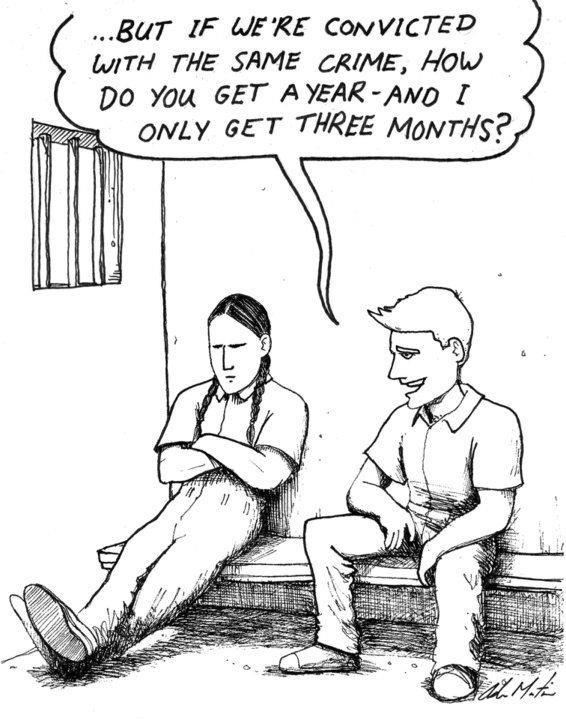
Modern racism is systemic. It's endemic to our education system, our legal structure, and everyday life. Decades of oppression have established an unbalanced system that is no accident. Ignorant complacency simply allows one to benefit from that racialized system without having to own up to the responsibility of its existence. It is no accident that white folk are unaware of painful truths of continuing racism. We don't want to be. 

Without intentionally forming relationships and engaging with others in their daily experiences, we avoid coming face to face with our racial sinfulness. Without an understanding of others' history and culture, we are indeed in danger of being 'accidentally racist.' But if we disengage and ignore reality, isn't that more intentional than accidental?

I haven't even addressed the actual content of Paisley's song. Or LL Cool J's contribution to it. Frankly, there is more foolishness in there than I have space to dig into in this post, and others have done the analysis more eloquently than than I could, so be sure to check them out as well.

Follow more conversations about racial justice and Christianity through email or RSS feed.

Thursday, April 11, 2013

Friday Fruit (04/12/13)

Voting Day
On Fridays, BTSF offers links to other discussions about race & Christianity. It's an opportunity for you to read about racial justice & Christianity from other perspectives, and for me to give props to the shoulders on which I stand...

Weekly Round Up:

These are some of BTSF's links of interest this week. What are yours?

Feel free to contribute your own links in the comments section, or submit items you feel should be included during the week. Self-promotion is encouraged.

Sunday, April 7, 2013

Recent History

Americans have a peculiar sense of time.
Many other countries can trace their history for millennia, if not as nations, then as cultures and societies: China, England, Egypt, Japan, Ethiopia. The United States has really only existed for a blip in time (having actively divorced itself from the society that occupied the land before it).

Perhaps because our country is relatively young, the scale on which we measure our history has been shortened. The majority of our historic sites are at most 300 years old, and we think a 50-year-old building is ancient.

This mindset makes it easy to believe that our past is far behind us. But in reality, every aspect of our history has occurred within just a few generations. Eliza Moore, the last known legal enslaved person, died in 1948. That means your parents (or certainly grandparents) had the opportunity to hear first-hand accounts from those who experienced American slavery. The 13th Amendment was passed less than 150 years ago, less than twice our current lifespan.

Anyone currently over the age of 50 lived in a time when police dogs and firehoses were unleashed on school children* and people of different races couldn't even be in swimming pools together. It is within a single generation of us that people of color were regularly denied the right to vote.** For centuries, officials were elected, laws were written, and a racialized society was legally maintained. And we think that all that has been washed away after just a few short decades?

How can we claim we are colorblind when this is the environment in which we have come of age? State-sanctioned, legally-mandated racism was in place less than a generation ago. How can we think we are free from the prejudice that was so recently the law of the land?

The idea that we are 'post-racial' is laughable. To assert that we should 'move on' or 'just get over it' is ludicrous given the accumulated injustice and disparity that has birthed our modern racialized society. The consequences of a not-so-distant past reverberate loudly today in our segregated cities, our education systems, in police behavior, and in the justice system.

Imagine if Germany had a society in which Jewish citizens were imprisoned twice as frequently and then disproportionately executed. The world would be up in arms! Yet with the USA's own brutal track record with people of color, our current practices remain unchecked.

If we are allowed to distance ourselves from a recent past, we may come to believe that we are inherently better people than those that came before. We forget that they read the bible, attended church, loved their children, and gave to charity, just like we do. Hiding behind the idea of 'ancient history' allows us to live unexamined lives in the present.


*Update: That sentence was written before Michael Brown was shot. Turns out this history is even more recent that initially stated. In fact, it's not even history.
**Similarly, see The Trouble with Voter ID Laws

Thursday, April 4, 2013

Friday Fruit (04/05/13)


Laura Mvula
On Fridays, BTSF offers links to other discussions about race & Christianity. It's an opportunity for you
to read about racial justice & Christianity from other perspectives, and for me to give props to the shoulders on which I stand...


Weekly Round Up:
These are some of BTSF's links of interest this week. What are yours?

Feel free to contribute your own links in the comments section, or submit items you feel should be included during the week. Self-promotion is encouraged.

Monday, April 1, 2013

Better than Jim Crow

Look how far we've come. 
So many of the racial issues that plagued our history are no longer with us. Slavery, Jim Crow, legalized segregation: all largely things of the past. Progress is good and we celebrate the heroes that have brought us this far. 

But if we rest in the satisfaction that we are no longer as we were a generation ago, we become complacent in our own battles with injustice today. Indeed, comparing ourselves with Jim Crow or KKK racism is setting a fairly low bar. 

Since the Civil Rights Era, the blatant ugliness of Jim Crow- racism has given way to a new, more subtle form of colorblind racism. Prejudice is no longer quite as overt or violent as it was in the 1960's, but the systemic, cultural  and generational manifestations of racism are still very much in place (see post: Defining Racism). 

Click to enlarge cartoon
While most of us believe that everyone should have a fair shot at getting ahead, many white folk are still actively against the sorts of policies that would make this sort of ideal world possible (eg. prison reform, affirmative action,  health care reform, racial profiling, voting access).

And so significant racial disparities remain, while we end up blaming the victim for the inequality. We still tout broad racial stereotypes or 'cultural pathology,' to avoid any personal culpability. 

So we are left with a country in which we no longer burn crosses, but where lives are still daily destroyed by racial prejudice (see post: New Jim Crow). The consequences of racism are still just as real, only without the same 'cause and effect' immediacy that there once was. 

In some ways, the subversive and insidious nature of modern racism can make it even more difficult to combat. It's harder to pin down, to prove, or to call out. We end up trivializing the testimony and experiences of our sisters and brothers of color, who tell us they experience the effects of racism everyday. When white folk  believe racism is no longer an issue, their own racial biases and privilege go unexamined and unchecked.


So how far have we really come? 
In 1967, Martin Luther King Jr. observed, "When we view the negative experiences of life, the Negro has a double share. There are twice as many unemployed. The rate of infant mortality among Negroes is double that of whites…"

Reflecting on this quote, Abagond responds "Forty-something years later little has changed: the black unemployment rate is 1.96 times the white one (2011) while black babies die at 2.36 times the rate of white babies (2005)."

In many ways, we're actually no better than Jim Crow at all. 
Creative Commons License
By Their Strange Fruit by Katelin H is licensed under a Creative Commons Attribution-NonCommercial-NoDerivs 3.0 Unported License.
Permissions beyond the scope of this license may be available at @BTSFblog