BTSF in chronological order (most recent articles appear first):

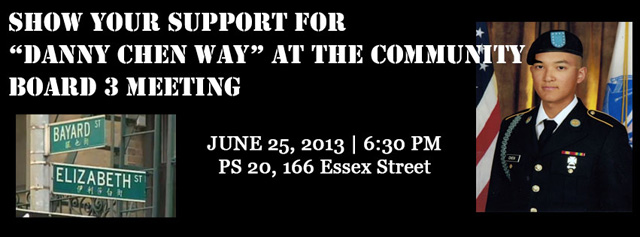
Thursday, June 27, 2013

Friday Fruit (06/27/13)

On Fridays, BTSF offers links to other discussions about race & Christianity. It's an opportunity for you
to read about racial justice & Christianity from other perspectives, and for me to give props to the shoulders on which I stand...

Weekly Round Up:

These are some of BTSF's links of interest this week. What are yours?

Feel free to contribute your own links in the comments section, or submit items you feel should be included during the week. Self-promotion is encouraged.

Sunday, June 23, 2013

"Ye Shall Know Them By Their Fruits"

Jesus told us that we would recognize His prophets, those that follow Him and love Him, by the fruits that they bear (Matthew 7:16-20). When it comes to race, does the world see Christianity, in particular white Christianity, as bearing good fruit (See post: The Cross and the Lynching Tree)?

In More Than Equals, Spencer Perkins observes that "Blacks have not been able to distinguish between white Christians and white non-Christians when it comes to racial issues." Our poor track record is further delineated in Emerson & Smith's Divided By Faith. Like secular white Americans, most white Christians "see no systematic discrimination against blacks; indeed, they deny the existence of any ongoing racial problem in the United States."

White Christians have not been allies for their sisters and brothers in the face of racial systemic oppression. Indeed, many white churches and clergy actively opposed the work of Rev. Martin Luther King and vehemently objected to the justice work coming from Black churches at the time. The unity of Christ was, and remains, severed. 

To be fair, there have also always been allies acting in the name of Christ for racial justice and reconciliation. But they are often the outliers, the 'extremists,' those whose theological priorities are questioned. They often act as individuals, or perhaps as small groups, but not as a unified body of Christ in the face of a world of racial brokenness and sin.

As white Christians, rather than producing the good fruit of Christ, we have instead born 'strange fruit.' And it has severely damaged their witness to the world. 

Strange Fruit
Billie Holiday first performed 'Strange Fruit' at the Cafe Society in 1939 to a stunned audience. Racial violence in all of its brutality was poignantly juxtaposed with the natural beauty of the south. The raw imagery of Jim Crow lynching captivated listeners. Holiday's haunting presentation cut to the soul, and she was met with great resistance in recording and performing it. 

I wrestle with referencing this song in this blog's title. The reality of violence, both past and present, against people of color is not to be trivialized, sensationalized, or appropriated. The magnitude of the injustices represented by this song deserve more than to be reduced to pithy turns of phrase. The song is not for callous consumption, and if its use here crosses a line, then no amount of good intentions will justify it. 

But the reality of the violence and injustice represented in the song are not only ongoing in today's society, but are often actively perpetuated by those who profess to be believers of the Christian faith. It is no hyperbole to suggest that people are dying in our streets because of the Church's inability to bear prophetic fruit to the nations. Too often we bear strange fruit instead.

This is a matter so grave it should shake us to the core of our souls and jolt us into action. And yet, white Christians stand by as black and brown youth are killed in the streets by state-sanctioned aggression. We send thousands of black men to prison every year. We allow a judicial system that is three times more likely to execute a black prisoner than a white one. We selectively revoke voting rights, and pollute neighborhoods. We kick children of color out of schools and into jail. We allow racial disparity across housing, healthcare, education, and employment, resulting in immensely disproportionate rates of  hypertension, anxiety, and heart disease. And we hardly blink an eye. This is very much the fruit of Holiday's song. It is no exaggeration to suggest that the terror and urgency she conveyed in her song are every bit as salient now. 

In a very real way, when we trifle with God's children, we are dealing in eternal consequences. Lives are at stake. Souls are at stake. Our current racialized power dynamics are in direct opposition to Christ's call to "to proclaim good news to the poor...to proclaim freedom for the prisoners." We are like Israel, wailing for our offerings to be received, while we "exploit all [our] workers...striking each other with wicked fists."

Who would believe that our God is powerful, loving, or in any way an agent of life-changing grace? Is it any wonder that Christians are known as hypocrites more than as healers? As condemners, more than as allies? 
Strange fruit, indeed. 

Bearing Good Fruit
The Church's broken history with race needs to be acknowledged before we can move forward. Our legacy of privilege and injustice has very real consequence for the Kingdom. It is time to prune the branches of our own indifference, so we can bear good fruit for Christ in our witness to the world. 

Despite our history, the Church has tremendous potential to usher racial justice and reconciliation on earth. It is the hope in Christ's promise of redemption and holy partnership that is at the heart of By Their Strange Fruit's mission. The Gospel is powerful in its capacity to affect hearts and minds, if we would only show the world that it is possible in Christ. 

I believe in the power of Cross to bring redemption to a broken world, to make allies of oppressors, and saints of sinners. This is the transforming image of Christ that we can present to a hurting world.
This is the good fruit that we can bear. 


Thursday, June 20, 2013

Friday Fruit (06/21/13)

More info here
On Fridays, BTSF offers links to other discussions about race & Christianity. It's an opportunity for you
to read about racial justice & Christianity from other perspectives, and for me to give props to the shoulders on which I stand...

Weekly Round Up:

These are some of BTSF's links of interest this week. What are yours?

Feel free to contribute your own links in the comments section, or submit items you feel should be included during the week. Self-promotion is encouraged.

Sunday, June 16, 2013

Listening well as a person of privilege: From pain to hope

This is the sixth and final post in an series  from Dr. Christena Cleveland on listening well as a person of privilege that originally appeared on her blog.

One of my privileged friends and her husband recently made the noble decision to move their young, white family into a low-income, predominantly black neighborhood precisely so they could listen well as people of privilege. Their urban adventure started out well but within the span of a few short months, their house was burglarized and both of their cars were stolen.

Like most novice reconcilers, they weren’t prepared for this amount of fear, loss and pain. While considering whether they should move their family out of the neighborhood and into a “safer”, more privileged space, it became clear to them that the fact that they had the option of moving out of the neighborhood was a marker of privilege. They ultimately decided to stay put, this time with an expectation that their pursuit of solidarity with their oppressed neighbors would likely incur immense pain.


There will be blood
It’s easy for privileged reconcilers to think that cross-cultural journeys into oppressed territory to “make things right” will be fairly straightforward and painless. After all, many privileged reconcilers haven’t personally encountered the relentless forces of oppression and often make the grave mistake of underestimating them. But make no mistake, when privilege and oppression meet face-to-face in pursuit of reconciliation, blood will be shed
This happened on the cross and it happens in our everyday encounters as people of reconciliation. As a form
of death, oppression stands as a formidable enemy that will continue to wage war against reconcilers who live in the “now but not yet.” Reconciliation always has a cost because even the tiniest, seemingly inconsequential acts of reconciliation between the privileged and the oppressed bear the grandiose power of the cross. And while this power ultimately defeats death, the victory comes at great cost and much bloodshed.

The pain incurred in pursuit of reconciliation is no joke because it approximates the work of the cross. If reconciliation work doesn’t bring about great pain, it’s not really reconciliation work. Case in point, the reconciling work of the cross was so violently painful that even Jesus the Great Reconciler approached it reluctantly. (‘Going a little farther, he fell with his face to the ground and prayed, “My Father, if it is possible, may this cup be taken from me. Yet not as I will, but as you will.”’ Matthew 26:39). 

Following Jesus’ footsteps, privileged reconcilers will encounter many forms of pain: physical or verbal assault, rejection from both privileged and oppressed folks, disillusionment in the face of failure, identity and worldview collapse, loneliness, etc. For this reason, it’s important to embrace this pain, feel it deeply and use it to find solidarity with Jesus who knows this pain all too well, and with oppressed folks who have long encountered the pain of an unreconciled Church and society. Privileged reconcilers who experience pain are in the good company of both the crucified Christ and oppressed folks.

There will be hope too!
Not only is pain a powerful point of solidarity with Jesus and oppressed people, it’s also a signpost of the impending victory over oppression. The pain that reconcilers experience should be framed not only by the knowledge of Christ’s death but also by the hope of Easter morning. Pain and hopelessness don’t have the last word! Reconcilers know that Friday afternoon is inevitably followed by Sunday morning, that weeping may endure for the night but joy comes in the morning, and that death precedes life. 

For this reason, reconcilers can fully experience misery and pain while also rejoicing that, in the kingdom of God, pain is a signpost that life must burst forth as it did on Easter morning. If reconcilers succumb to eschatological myopia and only consider their pain outside of the context of the resurrection, they sever pain’s powerful bond with hope. But, when reconcilers straddle the pain of the cross and the victory of the resurrection, they encounter an unshakeable hope in the experience of pain. And empowered with the hope that victory is on the horizon, they can continue to do the work of reconciliation with strength and joy.

Thanks to all who have read this blog series! I hope it’s been helpful. As a benediction of sorts, I leave you with this passage of hope from Romans 8:

Christ Jesus who died—more than that, who was raised to life—is at the right hand of God and is also interceding for us. 35 Who shall separate us from the love of Christ? Shall trouble or hardship or persecution or famine or nakedness or danger or sword? 36 As it is written:

“For your sake we face death all day long;
we are considered as sheep to be slaughtered.”

37 No, in all these things we are more than conquerors through him who loved us.


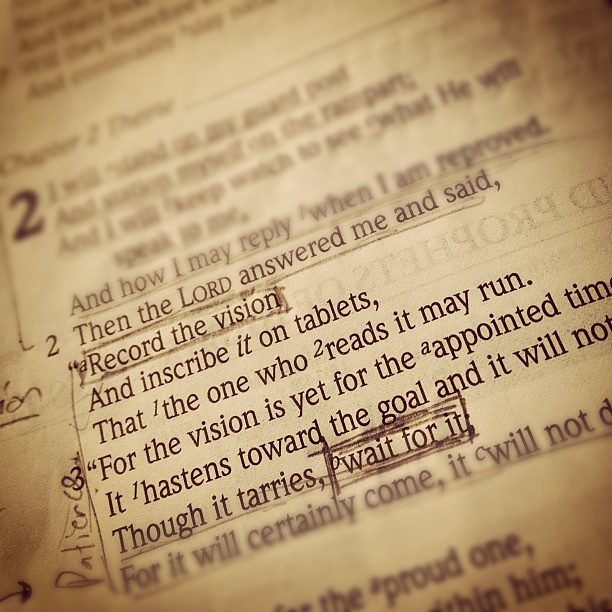
And another passage of hope from Habakkuk 2:

3 For the revelation awaits an appointed time;
it speaks of the end
and will not prove false.
Though it linger, wait for it;
it will certainly come
and will not delay


Grace and peace be yours in abundance. – Paul (and me too)

How has this series shaped how you listen well? Share below!

Christena is a social psychologist in Minneapolis, MN with an upcoming book “Disunity in Christ: Uncovering the Hidden Forces that Keep Us Apart” that you'll definitely want to check out.

Thursday, June 13, 2013

Friday Fruit (6/14/13)

Click to enlarge
Source (HT Race Bending)
On Fridays, BTSF offers links to other discussions about race & Christianity. It's an opportunity for you to read about racial justice & Christianity from other perspectives, and for me to give props to the shoulders on which I stand...

Weekly Round Up:

These are some of BTSF's links of interest this week. What are yours?

Feel free to contribute your own links in the comments section, or submit items you feel should be included during the week. Self-promotion is encouraged.
Creative Commons License
By Their Strange Fruit by Katelin H is licensed under a Creative Commons Attribution-NonCommercial-NoDerivs 3.0 Unported License.
Permissions beyond the scope of this license may be available at @BTSFblog